
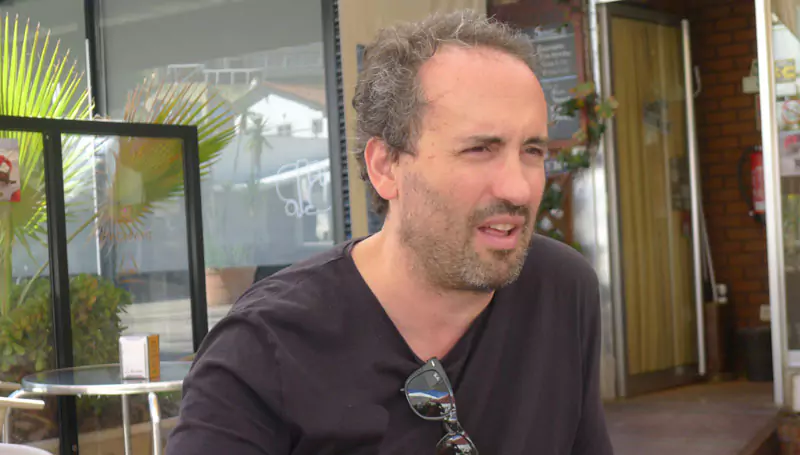
Rodrigo Francisco, Artistic Director of the Almada Festival, interviewed by Dana Rufolo.
(Interview date 12 July 2024.)
DR Along with the theatre festival, you always offer exhibits in your theatre and the surrounding buildings. This year, the exhibit is a look at Portuguese history. It’s 50 years since the quiet or “carnation” revolution of 1974 that put an end to the authoritarian regime Estado Novo which had been led by the dictator António de Oliveira Salazar for most of its 48 years of existence, as the walls of the foyer of the theatre you run, Almada’s Municipal Theater Joaquim Benite, so eloquently remind us. Can you just tell me a little bit about how this auxiliary project developed to coincide with the 41st edition of the Amada Festival?

Photo credit: Axel Hörhager.
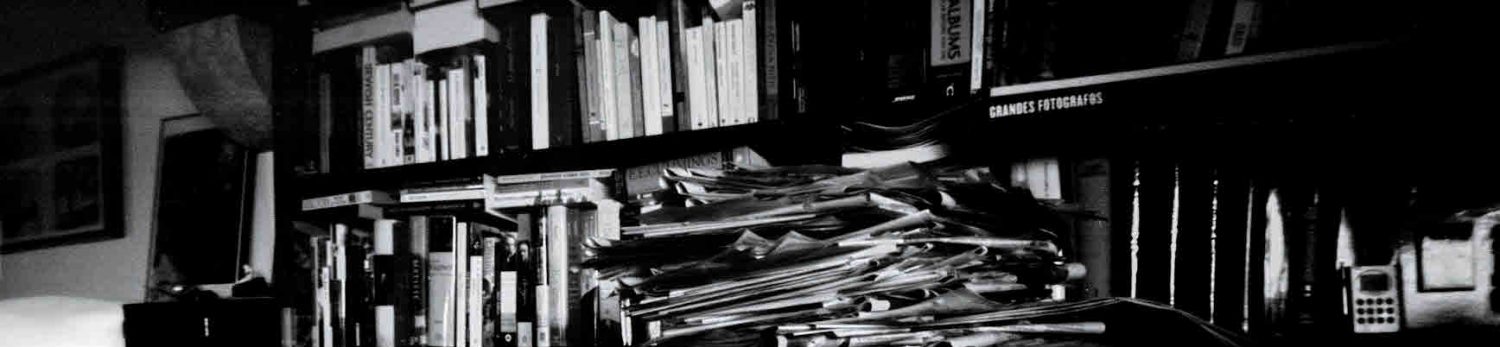
RF We are organizing four exhibitions this year with a private archival library [“Ephemera”] run by the historian and EU Parliamentarian, José Pacheco Pereira. He directs this private archive, and he has kilometres of shelves – things that he saves from the garbage. When somebody dies, the inheritors give him documents. And sometimes he also buys some objects trying to keep memory not only online but by actually having the objects. We’ve exhibited a very small bit of the objects. And he actually has all those newspapers, all those documents – especially material associated with the dictatorship of Salazar. And so, we prepared to commemorate the 50 years of the revolution by having four exhibits with the material from that archive, which has been very interesting. This is the third one. The fourth one will be when we open my next creation, which is an adaptation of August Wilson: Ma Rainey’s Black Bottom. It will open in November.
DR Does José Pacheco Pereira live in Lisbon?
RF He actually lives outside the city, because he needs lots of space. The warehouses are huge. The mayor of a city up from Lisbon gave him a huge warehouse, and he has another warehouse outside Lisbon in Barreiro. It’s incredible. He has a team of volunteers who say they are compulsive collectors; they love objects, and they love the past. And they love keeping memory alive, not letting the past die. They keep everything, they don’t throw anything away. They keep documents, theatre programmes, plays, books, objects … everything.
DR But only about Portugal? And only about the revolutionary period?
RF Yes, only about Portugal but not only about the revolutionary period. They also publish. The other day I saw a book they’d prepared because they’d found a box with love letters in it from a couple that had exchanged letters, and they did a play based on this so you can see how people at the beginning of the twentieth century loved and talked about their relationship. It’s quite interesting.
DR He’s obviously integrated into the cultural scene, because you know about him. It’s a shame that there isn’t something comparable in other countries.
RF I read interviews and newspaper articles about him, and since we were going to have this commemoration, I thought: “Why don’t we invite him to collaborate?” It is very easy to collaborate; I imagine if we were to collaborate with an official institution it would be impossible. We go to the warehouse, and we say we want this, and this, and he gives me the objects or documents – the originals in a big bag. We make copies and enlarge them.
( Texto integral da entrevista aqui.)
NOTA DO ARQUIVO EPHEMERA: In fact the Archive is international in scope, with materials from around 100 countries, and good collections from Spain, former Portugueses colonies, Brasil, USA, Great Britain, Nordic Countries, etc.
Seja o primeiro a comentar