NATIONAL MUSEUM OF AMERICAN HISTORY
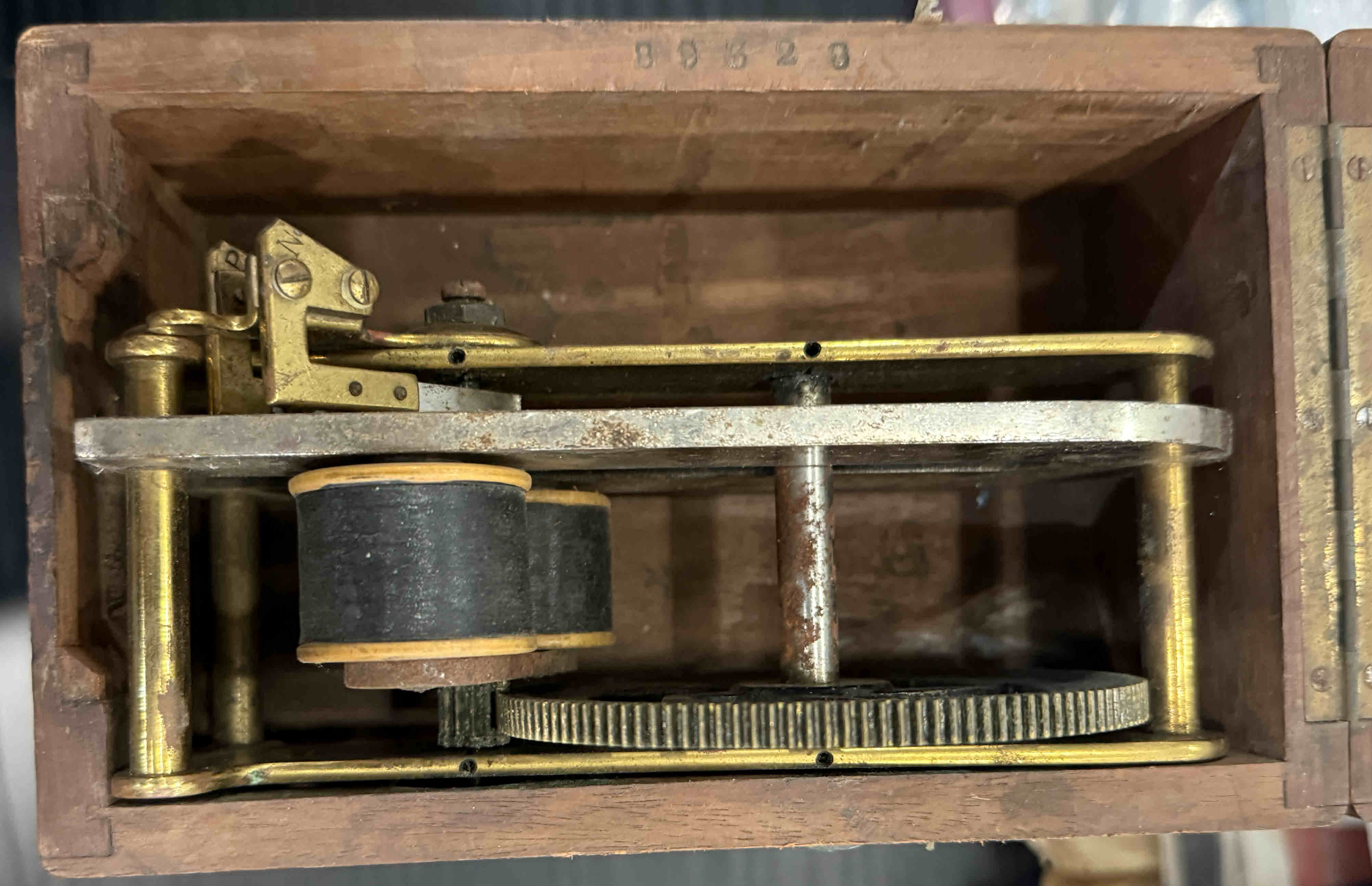
Davis & Kidder medical magneto machine. Wooden box with brass corners and ivory handle. A vertically-mounted horseshoe magnet with two electromagnet coils set next to the magnet ends. A geared mechanism connected to the coils is actuated by a crank that extends through the front of the box. An ivory handle is mounted on the crank. One pin is enclosed in the box.
Ari Davis (ca. 1811-1855) was a skilled American craftsman who received two patents in 1854. One (#10,788 of April 18) described a machine for producing wooden boxes with metal-reinforced dovetail corners. The other (#11,415 of August 1) described a magneto-electric machine. While this second patent was still in process, Davis sold the rights to both patents to Walter Kidder, a physician in Lowell, Massachusetts, allegedly for $4000. Advertisements for DAVIS’ (later DAVIS & KIDDER’S) PATENT MAGNETO-ELECTRIC MACHINE, FOR NERVOUS DISEASES were soon to be seen. By 1857, the business was in the hands of William H. Burnap (b. 1825), also of Lowell. In his book, The Improved Magneto-Electric Machine for Nervous Diseases (Lowell?, 1857), Burnap claimed that the improved Davis & Kidder machine was “widely known as the best article in use, with ten thousand units having been sold in 1856.” As there were counterfeit machines on the market, buyers should observe “that all genuine machines are enclosed in a brass-cornered (patent also) box.”
Seja o primeiro a comentar